Key Takeaways
- Cosmetic updates like painting, flooring, backsplash, and cabinet replacement in the same layout usually do not require a permit.
- Moving plumbing, adding electrical circuits, modifying gas lines, or removing walls typically requires a permit.
- Structural and utility changes must meet building code and pass inspections.
- Skipping required permits can lead to fines, resale problems, and costly corrections.
- When in doubt, check with your local building department before starting work.
Kitchen Remodeling Permit Overview
| Project Type | Permit Usually Required? | Why It Requires a Permit | Main Risks If Skipped | Inspection Typically Required? |
|---|---|---|---|---|
| Interior painting | No | Cosmetic only | None beyond aesthetic defects | No |
| Flooring replacement same layout | No | Surface update only | Subfloor damage if improperly installed | No |
| Backsplash installation | No | Cosmetic wall finish | Moisture intrusion behind tile | No |
| Cabinet replacement same footprint | No | No structural or utility change | Poor anchoring, sagging cabinets | No |
| Countertop replacement same sink location | No | Plumbing unchanged | Improper sealing, water intrusion | No |
| Appliance replacement same hookup | No | No system modification | Improper installation voiding warranty | No |
| Sink relocation | Yes | Changes plumbing system | Leaks, mold growth, drainage failure | Yes |
| New dishwasher line | Yes | Plumbing modification | Water damage, cabinet rot | Yes |
| Adding kitchen island with outlets | Yes | Electrical relocation required | Fire hazard, failed inspection | Yes |
| New dedicated appliance circuit | Yes | Electrical load change | Overloaded wiring, breaker failure | Yes |
| Electrical panel upgrade | Yes | Service capacity modification | Fire risk, insurance denial | Yes |
| Gas range conversion from electric | Yes | New gas line installation | Gas leaks, combustion hazards | Yes |
| Range hood ducting to exterior | Yes | Ventilation system change | Attic mold, grease buildup | Yes |
| Load bearing wall removal | Yes | Structural modification | Sagging ceilings, structural instability | Yes |
| Outdoor kitchen with utilities | Yes | Multi system installation | Shock risk, gas leaks, slab cracking | Yes |
If you are planning a kitchen remodel, one of the first questions that usually pops up is about permits. The short answer is, sometimes yes, sometimes no. It depends on the type of work you are doing. Structural, electrical, plumbing, or gas changes usually require permits, while cosmetic updates often do not. If you are considering remodeling your kitchen, it is important to understand when a permit is required to save time, money, and stress.
Why Kitchen Renovation Permits Matter
Kitchen renovation permits exist to protect homeowners, not to slow projects down. Permits make sure the work meets building codes, keep your home safe, and avoid problems later when selling or insuring your home.
Safety, Code Compliance, and Peace of Mind
If you are wondering if permits are really important, and if you really need them, the short answer is yes. They are important, and when required, you need them; there’s no way around that. Permits ensure that electrical wiring, plumbing, gas lines, and structural changes meet safety standards. Kitchens involve water, electricity, heat, and heavy use. When work is inspected, you know everything is installed correctly and safely, which gives real peace of mind for you and your family.
How Permits Protect Your Home Value
Unpermitted work can create serious issues when selling a home. Buyers, inspectors, and appraisers often flag renovations that were not approved. So, if in the future you don’t want to sell your home below market value to a cash buying company, get the required permit before starting any remodeling. Permitted work protects your investment, avoids last minute fixes, and helps your kitchen remodel add value instead of creating future headaches.
Understanding Kitchen Renovation Permits
Kitchen renovation permits are official approvals from your local building authority that allow specific remodeling work to begin. They are tied to safety codes and construction standards.
What a Kitchen Remodeling Permit Is
A kitchen remodeling permit is permission to perform regulated work such as electrical upgrades, plumbing changes, gas line modifications, or structural alterations. It usually includes inspections at different stages to confirm the work meets code requirements before the project is completed.
Why Permit Rules Vary by State and City
Building codes are influenced by national standards, but enforcement happens locally. Cities and counties interpret and apply codes differently. That is why a project that does not need a permit in one area might require one in another. Always confirm rules with the local building department before starting work.
Local Building Department Contact Information for Chicago, Dallas, Houston, Los Angeles, NYC, Orlando, Philadelphia, Phoenix, San DIego & San Antonio
Below is a quick reference table for checking if your kitchen remodeling project needs a permit. The 10 major U.S. cities are listed alphabetically, with direct links to permit portals or “Do I Need a Permit?” pages so you can get clear answers fast.
Tips for using these contacts:
- Most city sites have “Do I Need a Permit?” information directly on the permit page or via search/FAQ interfaces.
- If the city uses a 311 system (like NYC or Philadelphia), dialing 311 or the alternate number gets automatic routing to permit information.
- In Houston and Dallas, the permitting center phone lines can direct you to the exact permit division.
Kitchen Renovation Permits
Do You Need a Permit to Redo a Kitchen?
In many cases, redoing a kitchen does not require a permit, but it depends on what “redo” actually means. Cosmetic changes are usually exempt, while functional or system changes are not.
What “Redo” Usually Means in Home Remodeling
When homeowners say they are redoing a kitchen, they often mean updating finishes like cabinets, countertops, flooring, or paint. These types of updates typically focus on appearance rather than changing how the kitchen functions behind the walls.
Redo Kitchen Projects That Typically Do Not Require Permits
Redo kitchen projects that usually do not require permits include:
- painting walls
- replacing flooring
- installing a backsplash
- swapping cabinets in the same layout
- Replacing countertops without moving plumbing
These updates do not affect safety systems or structural elements.
Do You Need a Permit to Renovate a Kitchen?
Kitchen renovations are more likely to require permits because they often involve changes beyond surface level updates. Renovation usually means improving how the kitchen works, not just how it looks.
When Kitchen Renovation Requires A Permit
The chances that your project requires a permit are really high if your renovation includes:
- moving plumbing
- adding electrical circuits
- changing ventilation
- removing walls
Keep in mind that any work that alters how systems function or how loads are supported usually triggers permit requirements.
Layout Changes and Utility Modifications
Changing the kitchen layout often means relocating sinks, appliances, outlets, or lighting. These changes affect plumbing and electrical systems, which almost always require permits and inspections to ensure safe installation.
What Kitchen Remodeling Work Requires a Permit?
Most kitchen permits are triggered by work that affects safety systems or the structure of the home. These permits ensure the work meets code before walls are closed and the project is finalized.
1. Plumbing Relocation and Drainage Changes
Moving sinks, dishwashers, refrigerators with water lines, or any supply and drain pipes requires a permit because plumbing must meet code for proper drainage slope, venting, pipe sizing, and leak protection. When plumbing is not installed correctly, it can cause serious water damage and even health concerns.
Here is what can actually go wrong.
Water Damage Risks
Improper plumbing installation can lead to:
- Hidden pipe leaks inside walls or under cabinets
Even a slow drip can soak framing and drywall for months before you notice it. - Clogged or improperly sloped drains
Drain pipes must slope at approximately 1/4 inch per foot for proper flow. Too flat or too steep, and waste can accumulate, causing backups. - Loose or poorly sealed fittings
Incorrect connections can separate over time due to vibration from dishwashers or garbage disposals. - Cabinet base rot and subfloor damage
Water trapped under sinks can weaken plywood subfloors, leading to soft spots and costly structural repairs. - Ceiling damage below second floor kitchens
A small upstairs plumbing mistake can stain, sag, or collapse the ceiling below.
Even minor plumbing errors can easily lead to thousands of dollars in repair work.
Health Concerns From Improper Plumbing
Water issues are not just structural problems. They can affect your family’s health.
Improper drainage or undetected leaks can lead to:
- Mold growth
Mold thrives in dark, damp cabinet spaces and wall cavities. It can begin forming within 24 to 48 hours of moisture exposure. - Respiratory irritation and infections
Mold spores can aggravate asthma and cause chronic coughing, sinus congestion, and bronchial irritation. - Gastrointestinal infections
Cross connections or improper drainage can contaminate clean water lines in extreme cases. - Skin irritation and rashes
Mold exposure can trigger allergic reactions or skin sensitivity. - Allergies and long term indoor air quality issues
Persistent moisture problems affect the overall air quality of your home.
Why Plumbing Permits Matter
Plumbing permits require inspections that verify:
- Proper pipe slope for drainage
- Approved venting to prevent sewer gas buildup
- Correct pipe materials and sizing
- Leak testing before walls are closed
Inspectors check these items before drywall goes up, when it is still easy to correct problems. Once everything is sealed behind cabinets and tile, repairs become much more expensive.
2. Electrical Work Beyond Fixture Replacement
Installing new outlets, moving wiring, upgrading circuits, or adding appliances usually requires a permit because kitchens have strict electrical safety requirements. Between water, metal appliances, and high powered equipment, kitchens are one of the most dangerous and regulated rooms in the home.
Here’s what can go wrong when electrical work is not done to code.
Fire Hazards
Improper electrical installation can lead to:
- Overloaded circuits
Microwaves, refrigerators, dishwashers, and ranges require dedicated circuits. If everything is tied into one line, breakers may not trip properly, leading to overheating. - Loose wire connections
Loose wiring behind outlets can arc, which creates heat and sparks inside the wall. - Improper wire sizing
A 20 amp circuit requires 12 gauge wire. Using smaller 14 gauge wire can overheat and create fire risk. - No GFCI protection near sinks
Kitchens require Ground Fault Circuit Interrupter protection to prevent electrocution when water and electricity mix.
Electrical fires often start inside walls where you cannot see them. That is why inspections are required before drywall goes up.
Shock and Injury Risks
Improper electrical work can cause:
- Electric shock when touching appliances
- Energized cabinet hardware due to improper grounding
- Power surges to damage new appliances
- Increased risk during storms
Permits require inspectors to confirm:
- Proper circuit breakers
- Correct wire gauge
- GFCI and AFCI protection
- Proper grounding
When everything is inspected, you dramatically reduce risk.
3. Gas Line Modifications
Gas is dangerous. So, if you need to move, extend, or install a gas line, a permit is almost always required. Gas systems are tightly regulated because even small leaks can create major safety hazards.
Fire and Explosion Risks
Improper gas work can lead to:
- Undetected gas leaks
Even a slow leak can accumulate inside cabinets or walls. - Improper pipe sizing
If the gas line is too small, appliances may not operate correctly, leading to incomplete combustion. - Loose fittings or poor threading
Vibration from appliances can loosen improperly sealed joints.
Gas permits require pressure testing before the system is approved. Inspectors confirm:
- Proper pipe sizing
- Approved materials
- Leak free connections
- Safe shutoff valves
So remember, gas work is never something to skip permits on.
4. Structural Changes and Wall Removal
Removing walls, especially load bearing walls, requires a permit because if you don’t do it properly, your home can collapse. Removing a wall will affect how weight is distributed through your home. It might look simple, “just opening up the kitchen” may be a catastrophe; it can actually impact beams, ceiling joists, and roof loads.
Structural Failure Risks
Improper wall removal can cause:
- Ceiling sagging
- Cracked drywall throughout the home
- Doors that no longer close properly
- Floor unevenness
- In extreme cases, partial structural collapse
Did you know that load bearing walls transfer weight from the roof or upper floors down to the foundation? That role is very important, so removing them without proper support, such as engineered beams, can compromise the entire structure.
Permits ensure:
- Structural calculations are reviewed
- Proper beam sizing is used
- Posts are correctly supported
- Framing connections meet code
To make sure everything is done correctly, inspectors verify the framing before drywall is added and conceals it.
5. Ventilation and HVAC Adjustments
Kitchen ventilation is not just about comfort. It is about moisture control, grease management, and indoor air quality. Installing or modifying range hoods and ductwork usually requires a permit.
Ventilation is for Indoor Air Quality and to Reduce Fire Risks
Improper ventilation can lead to:
- Grease buildup inside cabinets or attic spaces
- Excess moisture causing mold in ceilings
- Poor combustion ventilation for gas appliances
Smoke not properly exhausting outdoors
Range hoods often require:
- Minimum duct diameter, commonly 6 inches or larger
- Exterior vent termination
- Proper clearances from combustible materials
If ventilation is done improperly, it can create long term damage.
Permits ensure:
- Correct duct sizing
- Proper exhaust routing
- Compliance with fire safety standards
Why These High Risk Areas Matter
When you remodel a kitchen, you are not just changing cabinets and countertops. You are working with a dangerous combination of:
- Water
- Electricity
- Gas
- Structural loads
- Combustion and ventilation
These systems must work together safely every single day. Permits are not just paperwork. They are checkpoints that confirm your kitchen is safe, functional, and built to last.
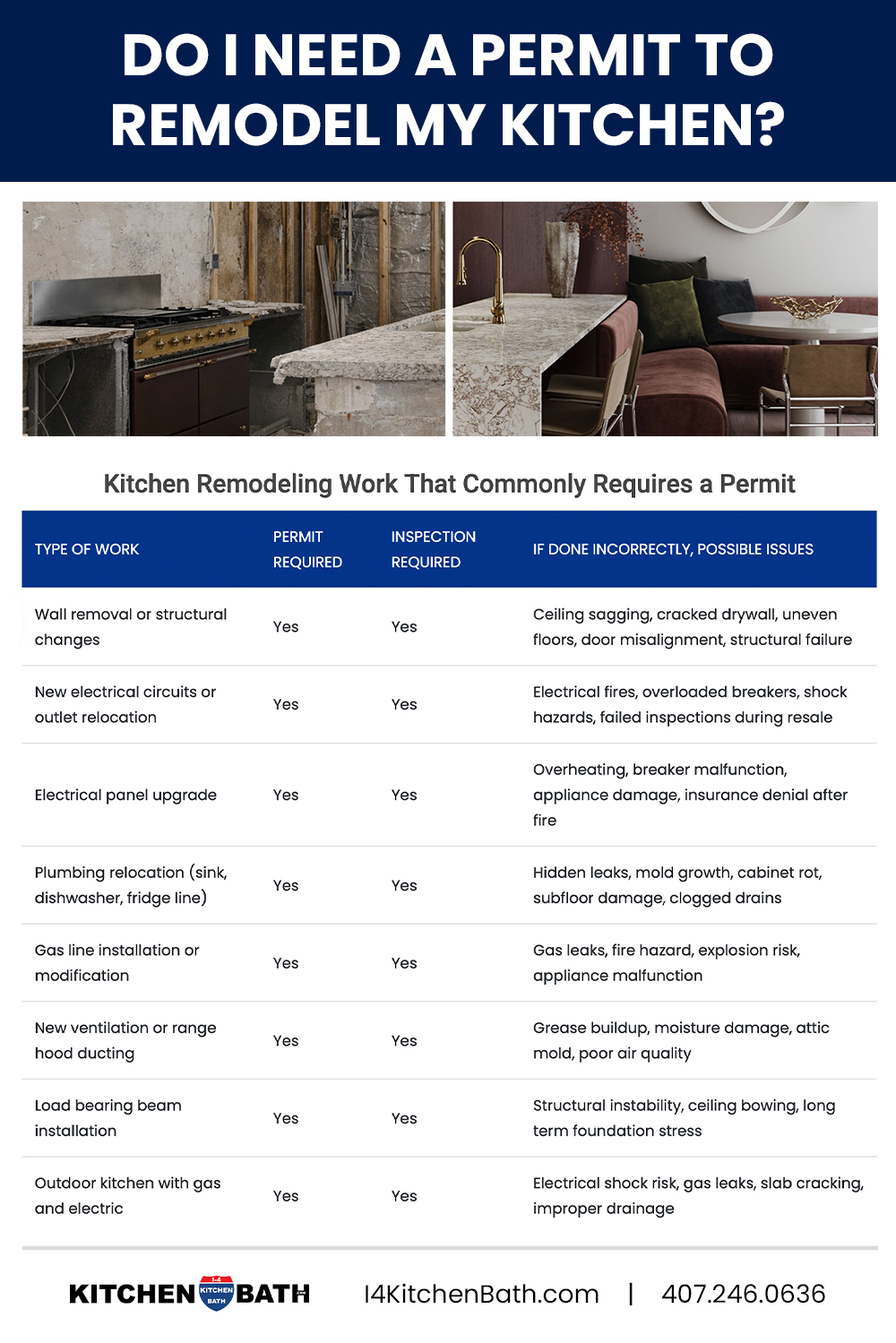
Kitchen Remodeling Work That Commonly Requires a Permit
| Type of Work | Permit Required | Inspection Required | If Done Incorrectly, Possible Issues |
|---|---|---|---|
| Wall removal or structural changes | Yes | Yes | Ceiling sagging, cracked drywall, uneven floors, door misalignment, structural failure |
| New electrical circuits or outlet relocation | Yes | Yes | Electrical fires, overloaded breakers, shock hazards, failed inspections during resale |
| Electrical panel upgrade | Yes | Yes | Overheating, breaker malfunction, appliance damage, insurance denial after fire |
| Plumbing relocation (sink, dishwasher, fridge line) | Yes | Yes | Hidden leaks, mold growth, cabinet rot, subfloor damage, clogged drains |
| Gas line installation or modification | Yes | Yes | Gas leaks, fire hazard, explosion risk, appliance malfunction |
| New ventilation or range hood ducting | Yes | Yes | Grease buildup, moisture damage, attic mold, poor air quality |
| Load bearing beam installation | Yes | Yes | Structural instability, ceiling bowing, long term foundation stress |
| Outdoor kitchen with gas and electric | Yes | Yes | Electrical shock risk, gas leaks, slab cracking, improper drainage |
What Kitchen Updates Usually Do Not Require a Permit?
Most cosmetic kitchen updates do not require a permit because they do not affect vital structures, plumbing, electrical, or gas systems. If you are simply improving the appearance without altering how the kitchen functions behind the walls, you typically don’t need a permit. However, always confirm with the local authorities if the cosmetic work you are planning to do is exempt.
Painting, Flooring, and Backsplashes
Painting walls, refinishing cabinets, installing tile backsplashes, and replacing flooring generally do not require permits because they focus purely on aesthetics and surface level improvements.
Homeowners often do the following on their own, without permits:
- Interior painting
- Luxury vinyl plank or tile replacement
- Subway tile backsplash installation
- Cabinet refinishing
These cosmetic upgrades rarely trigger inspections, because they are superficial.
Countertop Replacement (Without Plumbing Changes)
Usually, replacing countertops does not require a permit as long as plumbing stays in the same location. If you remove old laminate and install quartz or granite without moving the sink, drains, or supply lines, a permit is typically not required.
However, if you:
- Relocate the sink
- Add a prep sink
- Change drain or water supply lines
Then, a plumbing permit is often required.
Appliance Replacement Using Existing Connections
Swapping appliances using existing hookups generally does not require a permit. For example, replacing an electric range with another electric range in the same location is usually fine.
Permits may be required if:
- You convert electric to gas
- You add a new gas line
- You upgrade wiring for a higher amp appliance
- You relocate the appliance
Do I Need a Permit to Change Kitchen Cabinets?
In most cases, you do not need a permit to change kitchen cabinets if you are keeping the same layout and not altering utilities. The moment cabinet changes affect plumbing, electrical, or structural elements, permits may be required.
Cosmetic Cabinet Changes vs Functional Changes
Cabinet refacing, replacing cabinets in the same footprint, or installing new cabinets without moving utilities usually does not require a permit.
Common examples that typically do not require permits:
- Removing old cabinets and installing new ones in the same configuration
- Adding crown molding to cabinets
- Installing soft close hardware
These changes are cosmetic and do not impact safety systems.
When Cabinet Changes Trigger Electrical or Plumbing Permits
Cabinet projects can require permits when they affect:
- Outlet spacing and code compliance
- Under cabinet lighting wiring
- Moving sinks or dishwashers
- Removing soffits that hide wiring or ductwork
For example, building a larger island often requires relocating electrical outlets. That relocation usually requires a permit and inspection.
Do You Need a Permit to Install Kitchen Cabinets?
Installing kitchen cabinets does not usually require a permit if you are not changing utilities or structure. The installation must still meet safety standards, but permits are typically tied to electrical, plumbing, or structural modifications.
Wall Mounted Cabinets and Load Safety
Upper cabinets must be properly anchored to framing studs to support the weight. While this does not typically require a permit, improper installation can lead to sagging or failure. If cabinet installation involves altering framing or removing structural supports, permits are required.
Electrical, Lighting, and Outlet Adjustments
Kitchen electrical codes require outlets every 12 feet along countertop walls and specific spacing rules near sinks. If cabinet installation requires moving outlets, adding circuits, or rewiring under cabinet lighting, a permit is usually required.
Do I Need a Permit to Build an Outdoor Kitchen?
Yes, outdoor kitchens often require permits because they typically involve gas lines, electrical wiring, plumbing, and structural construction. Even small outdoor kitchen setups may require approval depending on the systems involved.
Why Outdoor Kitchens Often Require Permits
Outdoor kitchens usually include:
- Gas grills or pizza ovens
- Electrical outlets and lighting
- Plumbing for sinks
- Concrete slabs or permanent structures
These components trigger safety codes similar to those in indoor kitchens.
Electrical, Gas, Plumbing, and Structural Considerations
Outdoor environments add complexity. Electrical outlets must meet ground fault protection requirements. Gas lines must be properly sized and pressure tested. Concrete slabs must meet thickness and reinforcement standards, commonly 4 inches thick with reinforcement for permanent structures.
Because outdoor kitchens combine multiple systems, they are one of the most commonly permitted kitchen related projects.
Who Is Responsible for Pulling the Kitchen Permit?
In most cases, the person performing the regulated work is responsible for pulling the kitchen remodeling permit. If you hire a licensed contractor, they typically obtain the permit. If you act as your own contractor, you may be allowed to pull the permit yourself, depending on local rules.
Homeowner Pulled Permits vs Licensed Contractors
Homeowners can often pull permits for work performed on their primary residence, but this usually means they assume full responsibility for code compliance, inspections, and corrections. You become legally responsible for the quality and safety of the work.
Licensed contractors, on the other hand:
- Submit permit applications
- Schedule inspections
- Coordinate trade professionals
- Correct issues if inspectors flag concerns
Reputable professionals handle permits as part of the remodeling process.
Why Many Homeowners Let Contractors Handle Permits
Permits involve paperwork, plan reviews, and inspection scheduling. Many homeowners prefer contractors to manage this because it reduces stress and ensures compliance. Contractors are also familiar with inspection sequencing, which helps prevent delays.
What Happens During the Kitchen Permit Process?
The kitchen permit process typically includes an application, plan review if required, inspections during construction, and a final approval. The goal is to verify that work meets building and safety codes before it is concealed behind walls or finished surfaces.
1. Application and Plan Review
The process usually begins with submitting:
- A permit application
- Project description
- Construction drawings if structural or layout changes are involved
For structural changes or significant system modifications, plan review may take several business days. Minor permits, such as electrical or plumbing changes, may be issued more quickly.
2. Required Inspections During Construction
Inspections occur at key stages before work is covered up. Common inspection types include:
| Inspection Type | When It Occurs | What Is Checked |
|---|---|---|
| Rough electrical | Before drywall | Wiring, outlet placement, circuit protection |
| Rough plumbing | Before drywall | Drainage slope, venting, leak prevention |
| Gas pressure test | Before concealment | Gas line integrity and pressure stability |
| Framing inspection | After structural changes | Beam support, load transfer |
| Final inspection | After completion | Overall compliance and safety |
If an inspector finds an issue, corrections must be made before approval.
3. Final Approval and Sign Off
After all required inspections pass, the building department issues final approval. This confirms the kitchen remodel meets applicable codes. Keep in mind that maintaining records of approved permits and inspections is important for resale and insurance documentation.
How Long Do Kitchen Remodeling Permits Usually Take?
Kitchen remodeling permits typically take anywhere from a few days to several weeks, depending on project complexity and local review times. Minor electrical or plumbing permits are often processed faster than structural remodels requiring plan review.
Typical timelines:
| Project Type | Estimated Permit Processing Time |
|---|---|
| Minor electrical or plumbing | 1 to 5 business days |
| Cabinet layout change with utilities | 5 to 10 business days |
| Structural wall removal | 10 to 20 business days |
| Outdoor kitchen with multiple trades | 10 to 30 business days |
What Happens If You Remodel a Kitchen Without a Permit?
Remodeling a kitchen without a required permit can lead to fines, forced corrections, and complications when selling your home. Keep in mind that the risks are too many and the consequences too severe. If you just want to save time or money by skipping the permit process, it’s not worth it.
Fines, Stop Work Orders, and Corrections
If unpermitted work is discovered during construction, authorities can issue a “stop work order”. A stop order is an official notice issued by a local building department that requires all construction to stop immediately. This halts progress until permits are obtained.
Possible consequences include:
- Daily fines
- Double permit fees
- Required demolition of non compliant work
Resale, Appraisal, and Insurance Issues
Unpermitted renovations frequently surface during home inspections. Buyers may request repairs, price reductions, or proof of compliance. Appraisers may not count unpermitted improvements toward home value. Insurance companies may also deny claims related to unapproved work.
Common Kitchen Permit Mistakes Homeowners Make
Many permit problems happen because homeowners assume cosmetic work never needs approval or rely on advice that is not accurate. Understanding the most common mistakes helps you avoid delays, fines, and costly corrections later.
1. Assuming Cosmetic Work Never Needs Permits
Not all “cosmetic” work is truly cosmetic. The moment you move plumbing, shift outlets, add lighting, or remove soffits hiding wiring, the project may require a permit.
Common misunderstandings include:
- Believing cabinet replacement never triggers permits
- Assuming countertop installation never affects plumbing
- Thinking adding an island is purely decorative
If utilities or structure are involved, permits are often required.
2. Relying on Unlicensed Advice
Getting remodeling advice from friends or neighbors can lead to costly mistakes. Permit requirements are based on local building codes, not personal opinion.
When in doubt, verify directly with your local building department.
Kitchen Renovation Permits FAQs
Do you need a permit to remodel a kitchen?
You may not need a permit to redo a kitchen if the work is strictly cosmetic, such as painting, flooring, cabinet replacement in the same layout, or backsplash installation. However, if you move plumbing, electrical, gas lines, or walls, a permit is typically required.
In simple terms:
- Cosmetic updates, usually no permit
- System or structural changes, usually yes
Always confirm with the local authorities before starting remodeling.
Do You Need a Permit to Renovate a Kitchen?
Yes, kitchen renovations often require permits because they typically involve electrical, plumbing, ventilation, or structural changes. Renovation implies improving function, not just appearance, and those functional upgrades usually trigger inspections.
A permit is usually necessary if your project includes:
- Moving a sink
- Adding circuits
- Removing a wall
- Installing gas appliances
Do You Need a Permit to Change Kitchen Cabinets?
Changing kitchen cabinets does not usually require a permit if you keep the same layout and do not alter utilities. The moment cabinet changes require moving outlets, lighting, plumbing, or structural elements, a permit may be required.
Cabinet projects that often do not require permits:
- Refacing
- Replacing in same footprint
- Hardware upgrades
Cabinet projects that often do:
- Adding an island with outlets
- Relocating a sink
- Removing soffits containing wiring
Do I Need a Permit to Install Kitchen Cabinets?
Installing kitchen cabinets alone typically does not require a permit. However, if installation involves electrical rewiring, plumbing relocation, or structural changes, a permit is usually required.
The key factor is whether the installation affects:
- Electrical systems
- Plumbing systems
- Load bearing framing
If not, permits are generally not needed.
Do I Need a Permit to Build an Outdoor Kitchen?
Yes, outdoor kitchens commonly require permits because they often include gas lines, electrical wiring, plumbing, and permanent structures. These systems are regulated for safety and usually require inspections.
Outdoor kitchen components that trigger permits:
- Gas grill connections
- Dedicated electrical circuits
- Plumbing for sinks
- Concrete slab foundations
Because multiple trades are involved, permits are frequently required.
Can a Homeowner Pull a Kitchen Permit?
In many areas, homeowners can pull permits for work on their primary residence. However, doing so makes the homeowner responsible for code compliance, inspections, and corrections.
Before pulling a permit yourself, understand that:
- You must schedule inspections
- You are liable for violations
- You may need to provide drawings or documentation
Many homeowners prefer licensed contractors to handle this process.
Will a Permit Increase the Cost of a Kitchen Remodel?
Yes, permits add cost, but the fees are typically a small percentage of the overall remodel budget. Permit fees vary by location and scope of work, but they often range from a few hundred dollars to several thousand for complex structural projects.
Typical cost considerations:
| Project Scope | Typical Permit Fee Range |
|---|---|
| Minor electrical or plumbing | $100 to $500 |
| Moderate renovation with layout changes | $500 to $1,500 |
| Structural wall removal | $1,000 to $3,000 |
| Outdoor kitchen with multiple trades | $1,000 to $5,000 |
Permit costs are usually far less than the cost of correcting unpermitted work later.
Final Thoughts on Remodeling Your Kitchen With Confidence
Remodeling your kitchen is exciting. It is about creating a space where meals are shared, conversations happen, and memories are made. Permits might feel like a hurdle, but they are really there to protect your home, your safety, and your investment.
If your remodel is purely cosmetic, you may not need a permit. If it involves structure, plumbing, electrical, gas, or ventilation changes, you likely will. The key is understanding the difference before you begin.
When you approach your kitchen remodel with clarity and proper approvals, you can move forward with confidence, knowing your dream kitchen is built to last.
Avoid Costly Mistakes Before You Start
If you want to remodel your kitchen and you live in Orlando or Central Florida, our expert team help you plan your remodeling safely and correctly. Schedule a free consultation by calling (407) 246-0636 or filling out a contact form.