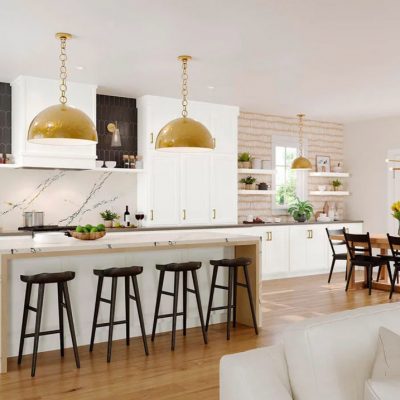
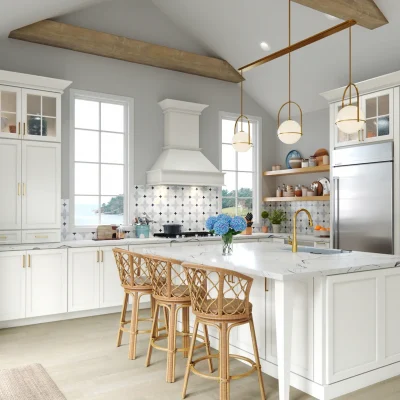
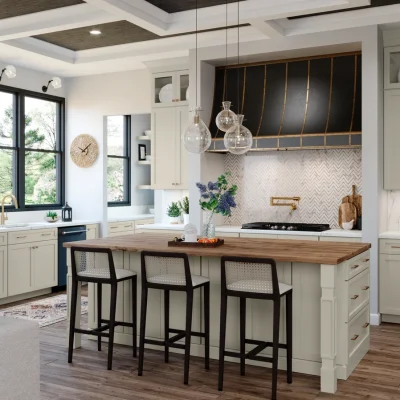
Just saying “Wood floors in the kitchen” out loud can spark mixed feelings among homeowners. Why the controversy? Well, wood flooring can provide beautiful warmth and character, but it is inevitable to immediately not worry about spills, moisture, dents, and maintenance. Both reactions are well-funded and make sense, so how can you decide if wood flooring is the right choice for your kitchen floors?
If you’ve been asking yourself questions like “Are wood floors a smart choice for a kitchen?” or “Will I regret this later?”, you’re not alone. This is one of the most common flooring conversations we have with homeowners at i4 Kitchen and Bath.
This article is here to help you make a confident, informed decision. No hype. No pressure. Just real pros, real cons, and real-life insight from a kitchen designer who’s seen how professionally installed and maintained wood floors actually perform in kitchens, day after day.
Key Takeaways
- Wood floors can work beautifully in kitchens, but they are not a one-size-fits-all solution
- The biggest advantages are warmth, comfort, and timeless style
- The biggest concerns are moisture, maintenance, and upfront cost
- Engineered wood often performs better than solid hardwood in kitchens
- Your lifestyle, budget, and habits matter more than trends
Wood Floor Kitchen Pros and Cons Overview
| Pros of Wood Floors in the Kitchen | Cons of Wood Floors in the Kitchen |
|---|---|
| Warm, inviting appearance | Sensitive to water and moisture |
| Comfortable underfoot | Higher initial investment |
| Seamless flow with other rooms | Can scratch or dent over time |
| Refinishable for long-term use | Requires ongoing care |
| Easy daily sweeping and cleaning | Not ideal for every household |
This table gives you a quick snapshot, but the real value comes from understanding how these pros and cons show up in everyday life. We’ll break that down step by step.
Why Homeowners Consider Wood Floors in the Kitchen

There’s a reason wood floors have remained popular for generations. They feel familiar, inviting, and comfortable. For many homeowners, wood floors bring back memories of family homes, holidays, and kitchens where everyone naturally gathered.
The kitchen is the heart of the home. It’s where mornings begin, kids do homework, friends linger with a glass of wine, and meals turn into memories. Wood floors support that feeling. They make a space feel lived-in, warm, and connected, not cold or overly commercial.
Many homeowners also want consistency. If the rest of the house has wood flooring, carrying it into the kitchen creates a seamless, open look that feels intentional and elevated. Especially in open-concept homes, mismatched flooring can break the flow and make the space feel choppy.
At the same time, homeowners want to make smart and informed decisions. They know kitchens deal with spills, humidity, pets, and heavy foot traffic. That’s why the decision feels emotional and practical at the same time.
When you say “Wood Floors” in a Kitchen, do you mean hardwood or engineered wood?
When people say “wood floors,” they often mean different things. And this matters, especially in a kitchen.
In most kitchen remodeling projects today, we are talking about engineered wood flooring, not traditional solid hardwood. Engineered wood is made with a real wood surface layered over a stable core. This construction helps it handle temperature changes and humidity much better, which is important in kitchens and in Florida homes.
Solid hardwood can be used in kitchens, but it requires more caution, more maintenance, and the right conditions. It’s not off the table, but it’s not always the best starting point.
So when we talk about wood floors in a kitchen throughout this article, we’re including:
- Engineered wood flooring designed for kitchens
- Solid hardwood in specific, well-planned situations
The type of wood floor you choose will heavily influence how many pros you enjoy and how many cons you need to manage.
Wood Floors in Kitchen Pros

1. Appearance and Aesthetics
Let’s start with the obvious one: wood floors are beautiful. There’s a natural warmth and richness that’s hard to replicate with any other material. Wood adds character, depth, and texture to a kitchen in a way that feels timeless and elegant.
Think about walking into your kitchen first thing in the morning. Sunlight hits the floor, the grain shows through, and the space immediately feels welcoming. Wood floors soften the room. They make kitchens feel less sterile and more lived-in.
Many homeowners choose wood because it works with almost any style. Traditional, modern, transitional, farmhouse, or Mediterranean kitchen, wood adapts. And as styles change over time, wood remains timeless.
2. Comfort Underfoot
If you spend a lot of time standing at work or at home, you already know this matters. Standing on wood feels noticeably more comfortable than standing on tile or stone.
Wood has a bit of natural give. It’s warmer underfoot and easier on your legs and back, especially if you’re prepping meals, washing dishes, or cooking for long stretches. For families who are always in the kitchen, this daily comfort really adds up.
This is one of those benefits homeowners don’t always think about upfront, but they feel it every single day.
3. Durability With Proper Care
Yes, kitchens are busy spaces. And yes, wood floors can absolutely handle that, when chosen and cared for properly.
High-quality engineered wood floors are designed to withstand regular foot traffic, pets, and everyday life. With the right finish and reasonable habits, wood floors can last decades, even in kitchens.
At i4 Kitchen and Bath, we’ve seen wood floors in kitchens that still look great years later because the homeowners understood how to care for them and chose the right product from the start.
4. Seamless Look Throughout the Home

One of the biggest reasons homeowners choose wood in the kitchen is continuity.
If your living room, dining room, or hallway already has wood floors, extending them into the kitchen creates a seamless, open feel. The home feels larger, more cohesive, and more thoughtfully designed.
This is especially important in open-concept homes; using a single flooring material helps everything flow together naturally.
5. Refinishable Over Time
Unlike many flooring options that require replacement, wood floors can be refreshed.
Scratches, wear patterns, and dull areas don’t mean the floor is done. In many cases, wood floors can be refinished to bring them back to life. That means you’re not locked into replacing the entire floor years down the road.
This long-term flexibility is one reason homeowners see wood floors as an investment, not just a design choice.
6. Easy Day-to-Day Cleaning
Despite what many people think, wood floors are simple to keep clean on a daily basis.
Sweeping, vacuuming, or using a microfiber mop is usually all it takes. There are no grout lines to scrub and no textured surfaces trapping crumbs.
As long as spills are wiped up promptly, everyday messes are very manageable. For busy households, that simplicity matters.
Wood Floors in Kitchen Cons
1. Higher Initial Cost
There’s no way around this one. Wood floors typically cost more upfront than many other kitchen flooring options.
Here in the U.S., real construction materials are expensive, and “faux” alternatives are common when we can’t afford the real deal. Between material quality, professional installation, and proper preparation, the investment can add up. While wood floors offer long-term value, the initial price point may not fit every budget.
This is where honest planning is important. A beautiful kitchen should feel exciting, not financially stressful. Sometimes is necessary to be practical and find the best solution that fits our budget and needs.
2. Not Water Resistant
Wood and water don’t love each other. That’s the reality.
Spills happen in kitchens. Ice melts, sinks overflow, dishwashers leak, and here in Florida, we have flooding from storms and hurricanes. While engineered wood handles moisture better than solid hardwood, it’s still not waterproof.
Flooding, repeated water exposure, or unnoticed leaks can cause damage over time. This means wood floors require monitoring and quick cleanup. And most importantly, if you choose wood floors, please keep in mind that after a natural disaster or accident, they may need to be replaced entirely.
3. Dents and Scratches Over Time
Since wood is a natural material, it comes with character, but also vulnerability.
Dropped pans, pet nails, high heels, and moving chairs can leave marks. Some homeowners don’t mind this “lived-in” look, while others find it stressful.
It’s important to be honest with yourself here. If every scratch is going to bother you, wood may feel like more maintenance than enjoyment.
4. Ongoing Maintenance Expectations
Wood floors don’t require constant attention, but they do require consistency.
You’ll need to use the right cleaning products, avoid excessive moisture, and occasionally recoat or refinish depending on wear. Area rugs near sinks and high-traffic zones become your best friends.
Wood floors reward homeowners who are willing to care for them. If you want a completely worry-free floor, this may feel like a downside.
The Reality of Having Wood Floors in a Kitchen

Wood floors in a kitchen are not fragile, but they are not carefree either. They ask for a little attention, not obsession. Homeowners who are happiest with wood floors are the ones who understand that spills will happen and clean them up, that life leaves marks, and that perfection is not the goal.
So, it’s time to think about how you actually use your kitchen. Kids running in and out? Pets waiting by the bowl? Cooking every night? Hosting often? Wood floors can handle all of that, but your expectations matter.
Here at i4 Kitchen and Bath, we believe that the homeowners who really love their wood kitchen floors are the ones who made the decision with clarity, not just emotion.
Hardwood Floor in Kitchen, Yes or No?
So, should you do it? The honest answer is, it depends.
Wood floors are a great choice for some kitchens and not the best fit for others. This decision comes down to lifestyle, habits, comfort level, location (if you live in a zone prone to flooding or storms), not just looks.
Let’s walk through how to decide if wood is the right choice for your kitchen floors.
How to Decide if Wood Is the Right Choice for Your Kitchen Floors
1. Budget
Wood flooring is an investment. Between materials, proper underlayment, and professional installation, costs can be higher than tile or vinyl.
That doesn’t mean it’s out of reach, but it does mean you should plan carefully. If staying within a strict budget is a priority, engineered wood or alternative materials might make more sense.
Our advice: find a local Kitchen showroom and seek professional help. At our Kitchen and bath showroom in Orlando, we help Central Florida homeowners explore options that align with both design goals and budget, because no one enjoys a remodel that feels stressful.
2. Commitment to Spill Cleanup and Maintenance
If you have a busy life, and spills may sit for hours or leaks go unnoticed, wood floors may not be the best match. But if wiping up water, using mats near the sink, and following basic care guidelines feel manageable, wood can work beautifully.
This isn’t about being perfect. It’s about being aware.
3. How You Use Your Kitchen
Some kitchens see light use. Others are the busiest rooms in the house.
If your kitchen is the heart of your home, used constantly by kids, guests, pets, and everyone in between, you’ll want to choose a durable wood floor with a strong finish, or consider whether tile might suit your lifestyle better.
There’s no wrong answer. The right floor is the one that supports how you live.
Your vision, our expertise: Design your dream kitchen!
If you are considering wood flooring for your kitchen and have questions or need advice, we are here for you. Schedule a free consultation by calling (407) 246-0636 or filling out a contact form.
Choosing Wood Flooring for the Kitchen

If you decide wood is right for you, the details matter more than most people realize.
1. Finish Matters More Than Species
Many homeowners focus on wood species first, oak, maple, hickory. But in kitchens, the finish plays a bigger role.
A durable, well-applied finish protects against moisture, stains, and daily wear. Matte and satin finishes also help disguise scratches better than high-gloss options.
Choosing the right finish can make the difference between a floor that stresses you out and one you enjoy living with.
2. Plank Width and Color Considerations
Wider planks create a more modern, open feel, but they also show movement more than narrow boards. Color matters too.
Medium tones often strike the best balance. They hide dust, crumbs, and wear better than very dark or very light floors, which is especially helpful in busy kitchens.
We often guide homeowners toward choices that look beautiful and forgive daily life.
3. Professional Installation Matters
This is not the place to cut corners. Proper installation helps protect wood floors from moisture issues, movement, and long-term damage. Correct subfloor preparation, expansion spacing, and sealing are critical in kitchens.
A professionally installed wood floor performs better and lasts longer. Period.
Wood Floor Kitchen Pros and Cons FAQs
Are Wood Floors a Bad Idea for Kitchens?
No, not at all. Wood floors can perform well in kitchens when the right product is chosen, and homeowners understand basic care and costs. The fact that wood floors are more expensive and not waterproof doesn’t make them impractical. Besides beautiful appearance and warmth, wood floors offer many more benefits.
Is Engineered Wood Better Than Solid Hardwood in a Kitchen?
In most cases, yes. Engineered wood handles moisture and humidity changes better, which makes it a more reliable option for kitchens, especially in Florida homes.
Will Wood Floors Get Ruined by Spills?
Spills that are cleaned up promptly are usually not an issue. Problems happen when water sits for long periods or leaks go unnoticed. Awareness matters more than perfection. If you decide to install wood flooring, you’ll need to monitor it.
Do Wood Floors Require a Lot of Maintenance?
Not a lot, but they do require consistency. Regular sweeping, proper cleaning products, and quick spill cleanup go a long way. Occasional refinishing may be needed over time, but refinishing is better and more cost-efficient than total replacement.
Are Wood Floors in the Kitchen Worth the Cost?
For homeowners who value warmth, comfort, and long-term style, yes. Wood floors are often seen as an investment in both daily enjoyment and overall home appeal. If cost is an issue, choose a material like tile or vinyl, which gives you the look but is more practical and affordable.
Conclusion
Wood floors in the kitchen come with both rewards and responsibilities. They offer warmth, comfort, and timeless beauty, but they also ask for care, awareness, and thoughtful decision-making.
If you love the idea of a kitchen that feels welcoming, connected, and lived-in, wood floors can be an incredible choice. The key is choosing the right type of wood, the right finish, the right installers, and having realistic expectations about daily life.
At the end of the day, the best kitchen floor is the one that supports how you live, not just how your kitchen looks.
Renovate Your Kitchen With Confidence
If you’re still weighing your options, visiting a kitchen showroom and seeing materials in person can make all the difference. At i4 Kitchen and Bath, we help Orlando & Central Florida homeowners explore flooring choices that feel right for their lifestyle, budget, and long-term goals, so your kitchen works beautifully today and for years to come.
We offer high-quality craftsmanship, smart design, and clear communication. Schedule a free consultation by calling (407) 246-0636 or filling out a contact form.