Quartz countertops are engineered, man-made surfaces, not natural stone. A factory mixes ground natural quartz, which makes up more than 90 percent of the slab, with resin to hold it together and pigments for color, then forms it into solid slabs. The result is a hard, low-maintenance surface that comes in many colors and patterns.
Choosing a countertop can feel simple at first, until you start comparing all the options. Then come the questions. Will white quartz look close enough to marble? Can it handle a hot pan? Is it more expensive than granite? How much maintenance are you really signing up for?
Color is important, of course, but the material itself makes the bigger difference in everyday life. The best choice depends on how your family uses the kitchen, how much you cook, how much maintenance you want, and what look feels right in your home.
At i4 Kitchen & Bath, our Orlando design team brings over 80 years of combined experience to those conversations. We will walk you through color, care, cost, and performance, including where quartz is a great fit and where another material may make more sense.
Key Takeaways
Here’s the quick summary before covering everything in detail.
- Quartz countertops are engineered, not natural stone: mostly ground quartz (Cambria lists up to 93 percent) bound together with resin.
- Typically, quartz doesn’t need sealing. For example, Cambria says its quartz never needs sealing or polishing, just mild soap and warm water.
- Use a trivet under hot pans and appliances, and keep standard quartz indoors, since UV can fade it outside.
- Price depends on brand, color, thickness, edge style, and layout, so compare quotes line by line.
Quartz Countertops Summary
| TOPIC | QUICK ANSWER |
|---|---|
| Material type | Engineered (manufactured), not natural stone |
| Composition | About 90% ground quartz or more, plus resin and pigments |
| Colors and patterns | Polished, matte, and textured finishes, in solid colors and stone-look patterns |
| Durability | Highly scratch-resistant, but hard impacts can chip or break it |
| Heat | Use a trivet or hot pad under hot cookware |
| Cleaning | Mild soap and warm water; avoid bleach and harsh chemicals |
| Sealing | Typically not needed. Always follow the manufacturer’s guidelines. |
| Thickness | Countertops are typically 2 cm (approx. 3/4 inch) or 3 cm (approx. 1 1/4 inches) thick |
| Edges | Popular profiles include eased, ogee, bullnose, and mitered |
| Backsplash | Thin slabs, 1 to 1.2 cm (approx. 3/8 to 1/2 inch), suit backsplashes; standard 2 cm and 3 cm slabs also work |
| Outdoor use | Standard slabs are indoor only, since UV rays can damage the surface |
Please note: The exact composition and specifications of engineered quartz vary by manufacturer and product. At i4 Kitchen & Bath, we work with leading engineered quartz brands such as Cambria, Silestone, and Corian Quartz. Each manufacturer has its own formulations, colors, patterns, finishes, and product specifications, so our designers recommend comparing the specific product rather than assuming every quartz slab is made exactly the same way.
What’s Covered in This Quartz Countertops Guide
Here are the main things to know before choosing quartz countertops, from what they’re made of to how they compare with other materials.
Is Quartz a Natural Stone?
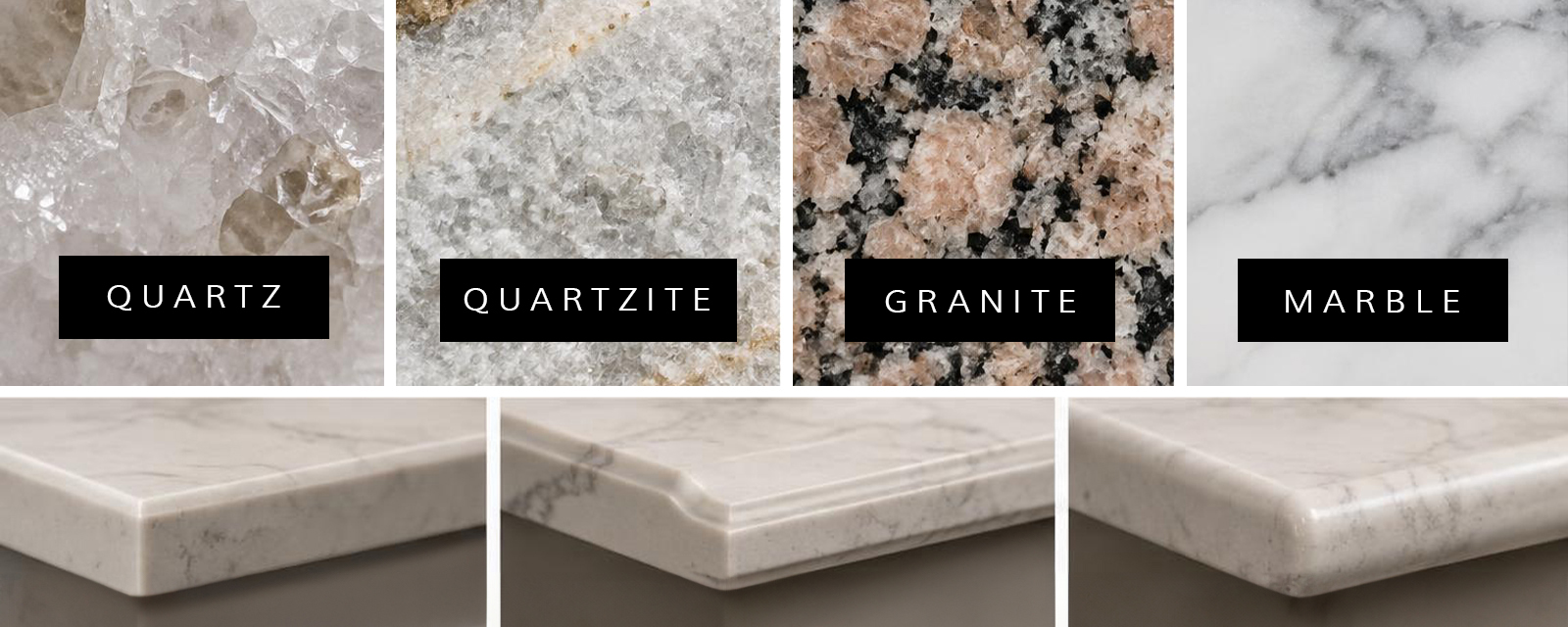
No, quartz countertops are not natural stone. Quartz itself is a natural mineral, but quartz countertops are engineered surfaces manufactured from natural quartz or other mineral materials combined with resin, pigments, and other ingredients. Natural stone, such as granite or marble, forms naturally and is quarried from the earth.
Quartz Countertop Colors and Patterns
Quartz comes in a wide range of colors, from bright whites and soft neutrals to gray and deep black. Patterns generally fall into three styles: solid, speckled, and veined, including marble-look designs. Finishes run from polished to matte and textured, and each one changes the sheen. Natural daylight and evening lamps can make the same slab read very differently, so our designers recommend checking your choice in different lighting before you decide.
Quartz vs. Granite Countertops
Quartz is an engineered surface that typically requires no sealing, while granite is a natural stone that generally offers greater heat resistance. Quartz provides more consistency from slab to slab, while granite has naturally occurring variation that makes each slab unique.
Quartz vs. Quartzite Countertops
Quartz is an engineered countertop material manufactured from crushed quartz and resin binders, while quartzite is a natural metamorphic rock formed when sandstone undergoes intense heat and pressure. Despite their similar names, they are fundamentally different materials, easy to mix up on a quote, so it’s worth confirming which one is listed. That difference can affect appearance, maintenance, performance, and cost.
Quartz vs. Corian and Solid Surface
Quartz is an engineered surface made with quartz or other mineral materials and resin, while Corian Solid Surface and other solid surface materials are acrylic-and-mineral composites. Quartz is generally more scratch resistant, while solid surface can often be sanded and refinished to repair scratches. Corian Quartz is a separate engineered quartz product.
Quartz vs. Porcelain and Other Materials
Quartz is an engineered surface made with mineral materials and resin, while porcelain is a dense ceramic material made from clay and minerals fired at high temperatures. The two differ in heat resistance, outdoor suitability, installation, and other performance characteristics.
Quartz Countertops: Pros and Cons
Quartz countertops are durable, low-maintenance engineered surfaces that do not require sealing and come in many colors and patterns. Their drawbacks include sensitivity to high heat, limited outdoor suitability for many products, and visible seams in larger installations.
Quartz Countertop Durability, Heat Resistance and Repair
Quartz countertops resist scratches and stains well, but they are not immune to damage. Direct heat can affect the resin binder, hard impacts can chip edges, and significant damage may require professional repair.
Quartz Countertop Cleaning, Care and Sealing
Clean quartz countertops with warm water, mild dish soap, and a soft cloth or sponge. Quartz typically does not require sealing, but abrasive cleaners and harsh chemicals can damage the finish or conflict with manufacturer care instructions.
How Much Do Quartz Countertops Cost?
Quartz countertop costs vary based on the brand, design, slab thickness, edge profile, countertop size, cutouts, and installation complexity. Because every layout and material selection is different, an itemized project quote provides a more accurate cost than a general online estimate.
Quartz Slab Sizes and Thickness
Quartz slabs come in standard and larger-format sizes, often called jumbo or super jumbo, depending on the manufacturer. Thicknesses typically range from 1 cm to 3 cm, with 2 cm and 3 cm commonly used for countertops and thinner slabs often used for vertical applications.
Quartz Countertop Edges, Backsplash and Islands
Quartz countertop edges, backsplashes, and island details affect both the look and function of a kitchen. Edge profiles range from simple eased edges to decorative options; quartz backsplashes can extend the countertop material up the wall, and island thickness and edge details help shape the overall design.
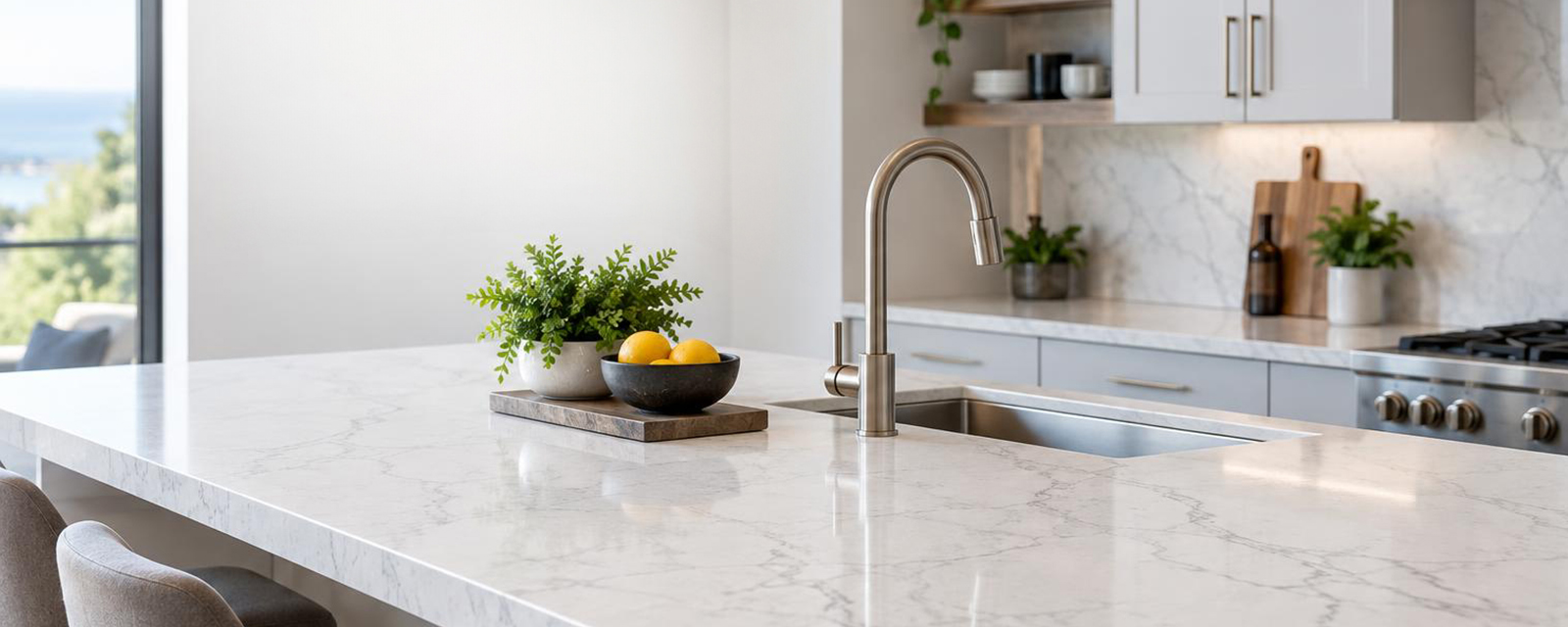
Is Quartz Right for Your Kitchen?
Quartz tends to be a good match for some households and a weaker fit for others, depending on how you use your kitchen.
Quartz is likely a good fit if you:
- Want to skip a sealing routine and keep cleaning simple
- Prefer a consistent look you can plan around before installation
- Are outfitting an indoor kitchen, not an outdoor one
You may want to look at other materials if you:
- Love the one-of-a-kind veining only natural stone offers
- Often set hot pans straight down without reaching for a trivet
- Are building an outdoor kitchen
Keep in mind that natural stone options generally call for more upkeep to think through, and how much varies by stone type. Photos and small samples only tell part of the story, since color and pattern shift under different light. Seeing a larger piece, or visiting our Cambria quartz showroom in Orlando, can help you decide with more confidence. From there, our countertop and kitchen remodeling teams can help you plan the rest of the project.
Quartz Countertops: FAQs
Quick answers to the questions we hear most. Each one links to a full guide if you want more detail.
Is Quartz Countertops Made Of?
Quartz countertops are engineered surfaces made from natural quartz (about 90 percent or more) or other mineral materials combined with polymer resins, pigments, and sometimes decorative ingredients. The exact proportions vary by manufacturer and product, so not every quartz countertop contains the same percentage of natural quartz.
Is Quartz a Natural Stone or Man-Made?
Quartz itself is a natural mineral, but quartz countertops are man-made, engineered surfaces. Manufacturers combine natural quartz or other mineral materials with resin, pigments, and other ingredients to create the finished slab. Natural stones such as granite, marble, and quartzite form naturally in the earth instead.
Is Quartz Better Than Granite?
It depends on what you value most. Quartz offers a predictable pattern and, typically, no sealing. Granite offers one-of-a-kind natural veining, and since it has no resin, it generally handles heat better than quartz. Most granite doesn’t need yearly sealing either. Neither material is better in every kitchen.
Is Quartz the Same as Quartzite?
No. Quartz and quartzite are different countertop materials. Quartz is an engineered surface made with mineral materials and resin, while quartzite is a natural metamorphic stone that is quarried and cut into slabs.
Are Quartz Countertops Safe?
Yes, finished quartz countertops are generally considered safe for normal household use. The primary documented health concern involves respirable silica dust created when quartz and other silica-containing materials are cut, ground, polished, or drilled during fabrication and installation. Cambria quartz is also NSF/ANSI 51 certified for food-contact areas.
Are Quartz Countertops Worth It?
Yes, quartz countertops can be worth it for homeowners who value durability, low maintenance, and a wide range of design options. Engineered quartz typically does not require regular sealing, making it a practical choice for busy kitchens and bathrooms. Whether it is worth it ultimately depends on your priorities, budget, and design goals.
Conclusion
The countertop is one of those things you use without even thinking about it. Coffee goes there in the morning. Groceries land there after a store run. Dinner gets prepped there. Someone always ends up leaning on it during a conversation.
That is why the material needs to make sense for your life. Pick something that fits how you cook, how much cleaning you want to do, and what you will still enjoy looking at years from now.
Visit Our Orlando Showroom & Get Inspired
See premium finishes and craftsmanship up close. Schedule a free consultation by calling (407) 246-0636 or filling out a contact form.
References
- California Division of Occupational Safety and Health (Cal/OSHA), Engineered Stone Countertop Fabrication: https://dir.ca.gov/dosh/dosh_publications/Engineered-stone-counters.pdf
- Cambria, Product Care FAQs: https://www.cambriausa.com/faq/care/
- Cambria, Product Specification Sheet: https://www.cambriausa.com/content/dam/cusa/sales-marketing-collateral/product-technical-information/product-specification-sheet-english.pdf
- Cambria, Quartz FAQs (composition, NSF/ANSI 51, seams): https://www.cambriausa.com/content/dam/cusa/sales-marketing-collateral/home-depot/home-depot-quartz-faqs-sell-sheet.pdf
- Cambria, Designing with Depth: A Guide to Countertop Thickness: https://www.cambriausa.com/cambria-style/blog/a-guide-to-countertop-thickness
- Cambria, Thicknesses and Edge Profiles: https://www.cambriausa.com/quartz-countertops/thicknesses-edge-profiles
- Cambria, Finishes and Edge Profiles: https://www.cambriausa.com/quartz-countertops/finishes-edge-profiles
- Cosentino USA, Silestone Maintenance: https://www.cosentino.com/usa/silestone/maintenance/
- Cosentino, Silestone Safety Data Sheet: https://osh.cosentino.com/wp-content/uploads/2023/05/Safety-Datasheet-Silestone-2023-13_04-2023-EN-Digital.pdf
- Cosentino, Use, Cleaning and Maintenance Manual, Silestone & ECO Line: https://content.cosentino.com/alldocuments/silestone/maintenance/cleaning-maintenance/maintenance-use-EN.pdf
- Cosentino USA, Silestone Kitchen Countertops: https://www.cosentino.com/usa/silestone/countertops/
- Cosentino USA, Silestone Cladding: https://www.cosentino.com/usa/silestone/cladding/
- Natural Stone Institute, Sealing Natural Stone Countertops: https://www.naturalstoneinstitute.org/consumers/sealing-stone/
- Natural Stone Institute, What Is Sandstone and Quartzite: https://www.naturalstoneinstitute.org/consumers/varieties/sandstone/
- U.S. EPA CompTox Chemicals Dashboard, Corian Solid Surface: https://comptox.epa.gov/chemexpo/product/582431/
- DuPont, Corian Quartz: https://www.corianquartz.com/